

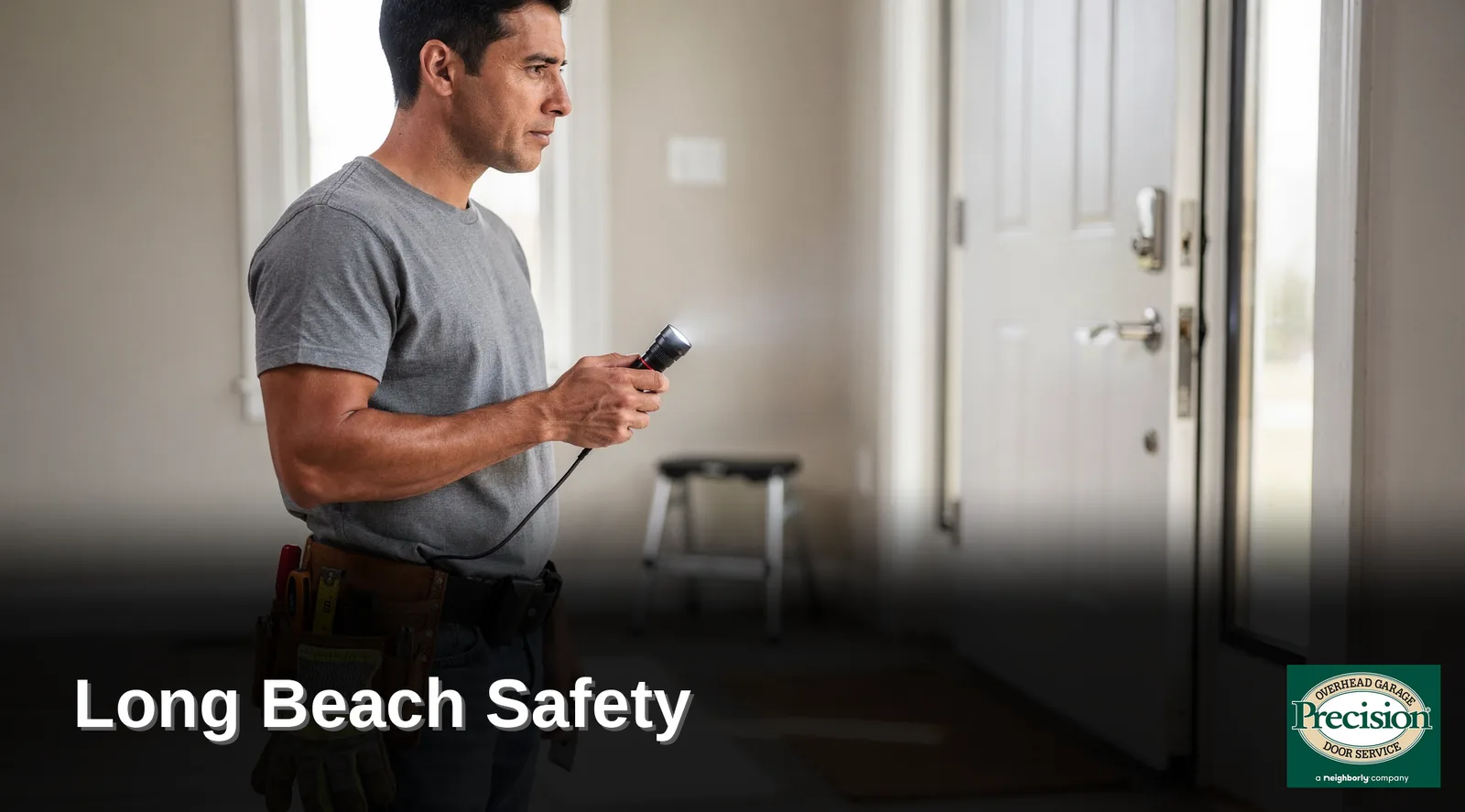
Long Beach Safety: Garage Door Repair, Installation, and Maintenance
A garage door safety inspection checklist includes 25 components: springs, cables, rollers, tracks, sensors, and hardware. Precision Garage Door of Long Beach recommends annual professional inspections to test the auto-reverse safety feature, check balance, tighten bolts, and lubricate moving parts, preventing costly failures and injuries.
Auto-Reverse Testing tops every checklist: engage the opener, lower the door, then trip the sensor to confirm it reverses, since the garage door is the largest moving object in a home. Precision Garage Door of Long Beach, CA, recommends verifying springs, cables, and brackets during this same inspection.
A thorough garage door safety inspection checklist, detailed further in Common Garage Door Repair Issues in Long Beach, covers automatic reverse function testing, balance checks, cable and spring examination, track alignment, and sensor operation. Homeowners test the auto-reverse by engaging the motor, lowering the door, then tripping the sensor. Precision Garage Door of Long Beach technicians perform these checks, catching wear before it causes malfunction or injury.
Key Takeaways
-
Regular garage door maintenance prevents safety failures in the largest moving object on residential homes.
-
Clopay extension springs feature exclusive safety containment cables that stop snapping springs from causing injury.
-
Garage door safety features protect occupants only when they function properly and receive routine inspection.
-
Professional technicians use fillable PDF inspection checklists to systematically evaluate complete garage door systems.
Regular garage door maintenance prevents safety failures in the largest moving object on residential homes.
Clopay extension springs feature exclusive safety containment cables that stop snapping springs from causing injury.
Garage door safety features protect occupants only when they function properly and receive routine inspection.
Professional technicians use fillable PDF inspection checklists to systematically evaluate complete garage door systems.
What Do You Need Before Inspecting Your Door?
A safe inspection requires distance, patience, and a clear understanding of which parts are off-limits. Springs and bottom brackets hold extreme tension, and homeowners without professional training should never touch, loosen, or adjust them. A cable or bracket under strain can snap suddenly, causing serious injury. Preparation matters more than tools here.
Before testing the door’s movement, clear the area completely. Children, pets, and stored items should stay away from the opening while the door travels up or down. This single habit prevents most avoidable garage door accidents in Long Beach households.
What Should Homeowners Avoid Touching During a Check?
Bottom brackets and torsion springs top the list of off-limit components. These parts store enormous force, and tampering with them without proper training risks sudden, forceful injury. Homeowners should observe, listen, and note problems rather than attempt repairs.
When Should a Professional Take Over?
If a spring looks worn, stretched, or rusted, stop the inspection and call for help. Long Beach safety depends on catching these warning signs early rather than pushing through them.

How Do You Complete the Safety Checklist Step by Step?
Five checks determine whether a garage door remains safe for daily use. Skipping any one of them lets small defects turn into stuck doors, failed sensors, or an unexpected door fall. Homeowners in Long Beach, where cool overnight air meets warm daytime temperatures, face an added risk: metal parts contract, lubricants thicken, and sensors shift out of alignment as conditions change. A short inspection routine catches these issues before they become safety hazards.
-
Lower the door using the opener, then wave a hand near the sensor threshold. The door should reverse immediately; if it does not, schedule service without delay.
-
Disengage the motor and elevator the door by hand. Resistance, sticking, or uneven movement signals a warped or unbalanced track.
-
Examine every panel closely. Cracks, dents, rust spots, warping, and water staining all point to structural weakness.
-
Open and close the door manually before testing the opener. Smooth, quiet motion confirms that the hardware is functioning correctly before automated use.
Lower the door using the opener, then wave a hand near the sensor threshold. The door should reverse immediately; if it does not, schedule service without delay.
Disengage the motor and elevator the door by hand. Resistance, sticking, or uneven movement signals a warped or unbalanced track.
Examine every panel closely. Cracks, dents, rust spots, warping, and water staining all point to structural weakness.
Open and close the door manually before testing the opener. Smooth, quiet motion confirms that the hardware is functioning correctly before automated use.
Why does the door behave differently after a cold night?
Overnight temperature drops cause metal components to contract and lubricants to thicken. Sensors can shift slightly out of alignment as materials cool and expand unevenly. A quick morning check after a cold snap catches these shifts before they cause a stuck or unresponsive door.
When Should You Call a Professional Technician?
Professional service becomes necessary the moment a garage door shows signs of gradual failure rather than sudden malfunction. Locking problems, for instance, rarely appear overnight. Misaligned tracks, worn locking hardware, and excessive pressure from the opener build up slowly, and each of these issues signals that a trained eye should inspect the system before the door fails to secure entirely.
A broken spring falls into the same category, even on doors built with modern safeguards. Many quality garage doors include safety containment features, such as cables designed to keep a snapping spring from flying loose and causing injury. That protection reduces harm, but it does not fix the spring. Replacement always requires a licensed technician.
How quickly can a technician respond in Long Beach?
Precision Garage Door of Long Beach operates locally, allowing technicians to reach homes without the delays common with out-of-area contractors. Same-day repair service addresses issues discovered during a homeowner’s own inspection, closing the gap between spotting a problem and resolving it.
Homeowners should schedule service if they notice any of the following:
-
Grinding or popping sounds during operation
-
A door that hesitates or reverses unexpectedly
-
Visible gaps, misalignment, or a spring that looks stretched or broken
Grinding or popping sounds during operation
A door that hesitates or reverses unexpectedly
Visible gaps, misalignment, or a spring that looks stretched or broken
A comprehensive garage door safety inspection protects your family and property while extending your system’s lifespan. Regular maintenance identifies potential hazards before they become costly repairs or dangerous failures. Our certified technicians at Precision Garage Door of Long Beach bring expertise. Precision to every inspection, ensuring your door operates safely and reliably. Schedule your safety check today and experience the peace of mind that comes with professional workmanship and our industry-leading warranty protection.